Introduction
Teaching your dog to come when called is one of the most important skills you can develop as a responsible dog owner. However, ordinary recall training may not be enough when your dog spots a squirrel, runs toward an open gate, or gets distracted near a busy road. In these situations, an emergency recall command can make a significant difference.
Learning how to teach a dog an emergency recall command involves creating a powerful association between a unique verbal cue and an exceptionally rewarding experience. Instead of repeatedly calling your dog and hoping for a response, you build a reliable behavior through careful practice, consistency, and positive reinforcement.
Although no dog will respond perfectly in every situation, structured training can greatly improve your chances of getting your dog’s attention when it matters most. Whether you have a young puppy or an adult dog, you can start building this valuable safety skill with a few simple techniques.
What Is an Emergency Recall Command?
An emergency recall is a special word, phrase, or sound that tells your dog to return to you immediately, even when something exciting is happening nearby. It differs from an everyday recall because you reserve it for situations where a fast response is especially important.
For example, you might use an ordinary command such as “come” when calling your dog inside for dinner. An emergency recall could be a distinctive word such as “here now” or “quick,” which always predicts an unusually valuable reward.
The goal is to make your dog respond enthusiastically because the cue has a strong, positive history.

Why Is Emergency Recall Different From Ordinary Recall?
Regular recall helps your dog return during walks, playtime, and everyday activities. Emergency recall adds another layer of preparation for unexpected situations.
Because the emergency cue is used sparingly and paired with exceptional rewards, it can stand out from ordinary instructions. Your dog learns that hearing this specific signal means something wonderful is about to happen.
However, emergency recall is not a substitute for a leash, secure fencing, or appropriate supervision. It is an additional safety skill, not a guarantee that your dog will ignore every distraction.
Why Every Dog Should Learn Emergency Recall
Dogs naturally investigate interesting smells, chase moving objects, and explore their surroundings. Even a well-trained dog can become distracted by wildlife, unfamiliar animals, or sudden noises.
An emergency recall gives you another way to interrupt these behaviors before they develop into dangerous situations.
It can be particularly useful if your dog slips through an open door, approaches an unsafe area, or begins moving away from you in an unfamiliar environment. It may also help during off-leash activities in permitted, secure spaces.
Emergency recall training offers benefits beyond safety. It strengthens communication, builds trust, and encourages your dog to check in with you rather than treating your voice as background noise.
The most important principle is simple: returning to you should always feel worthwhile. If your dog expects punishment, frustration, or the immediate end of every enjoyable activity, responding may become less appealing.
How to Teach a Dog an Emergency Recall Command Step by Step
The most effective approach begins in a quiet environment and gradually progresses to more challenging situations. Avoid testing the cue in a dangerous setting before your dog has developed a strong understanding of it.
Choose a Unique Emergency Recall Word
Start by selecting a short, distinctive cue that you do not regularly use in conversation. Words such as “rapid,” “jackpot,” or “right here” can work if they are easy for you to say clearly and consistently.
Avoid choosing a cue that resembles your dog’s name or another familiar command. A distinctive sound makes it easier for your dog to recognize the signal.
Once you select the cue, commit to using the same word every time. Changing between several phrases can make the training less predictable.
Prepare Exceptional Rewards
Choose rewards that your dog genuinely loves. Small pieces of cooked chicken, soft training treats, or another dog-safe favorite may work better than ordinary kibble.
The reward should be especially valuable compared with what your dog normally receives during training. For many dogs, several tiny treats delivered one after another create an exciting reward experience.
You can also use enthusiastic praise or a favorite toy if your dog finds these motivating. However, food rewards are often convenient because they can be delivered quickly and repeatedly.
Keep treats small enough to avoid overfeeding, and account for training treats in your dog’s daily food intake.
Build a Positive Association With the Cue
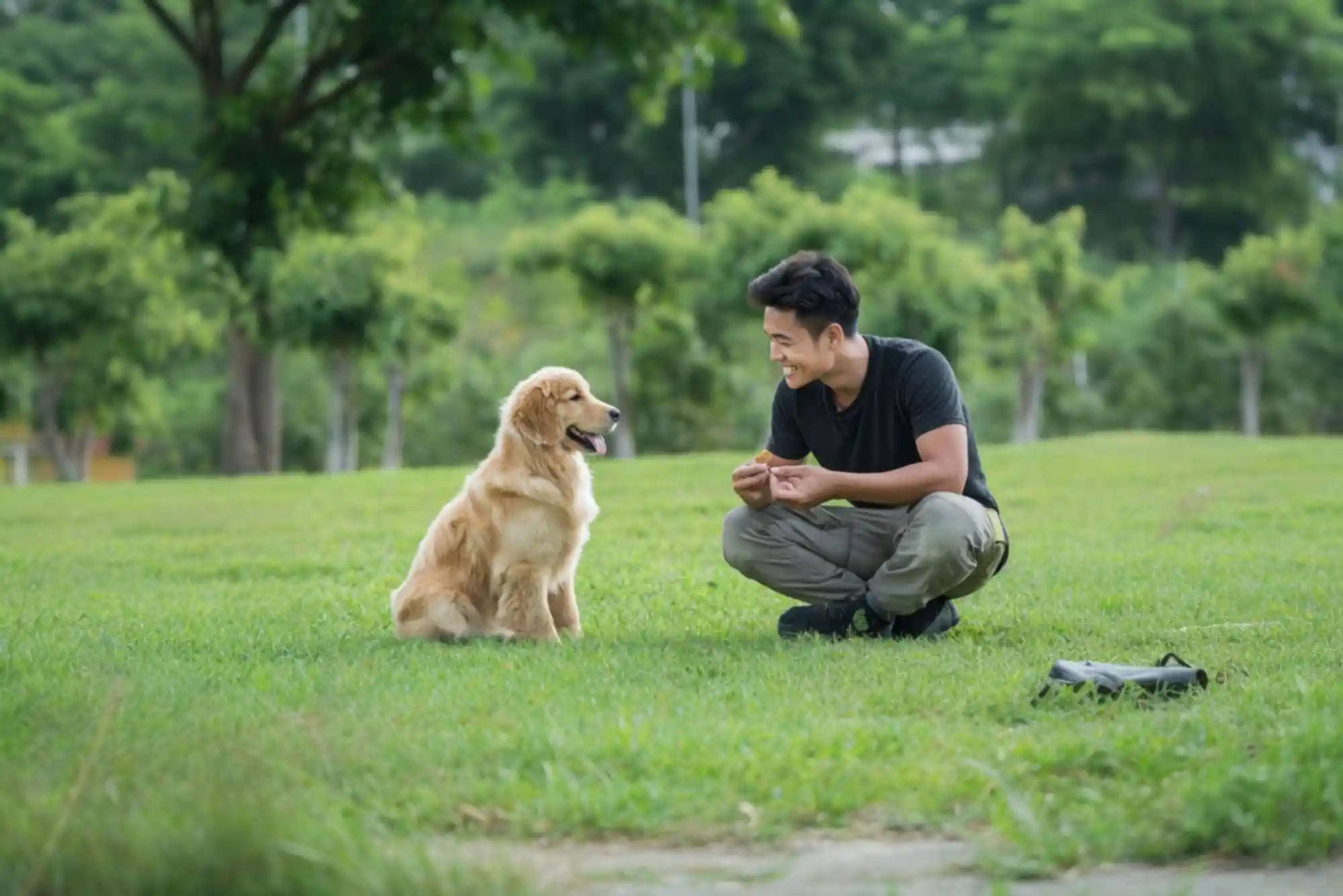
Begin indoors, away from distractions. Say your emergency recall word once in a cheerful, clear voice. Immediately provide several exceptional treats, even if your dog has not moved toward you.
Repeat this process in short sessions over several days. At this stage, you are not testing whether your dog can return from a distance. You are teaching that the sound predicts an outstanding reward.
Keep each session brief and enjoyable. A handful of successful repetitions is more useful than repeating the cue until your dog loses interest.
Do not use the emergency word casually throughout the day. Its value depends on a consistent connection between the cue and the reward.
Practice Short-Distance Recalls
Once your dog responds happily to the cue, introduce a little movement. Stand a short distance away, say the emergency word, and encourage your dog to approach.
When your dog reaches you, reward immediately with several small treats and warm praise. Delivering the reward close to you helps reinforce the complete behavior of returning.
If your dog hesitates, reduce the distance or make the environment easier. Avoid repeating the cue several times in a row. Instead, help your dog succeed and try again when you have their attention.
As your dog becomes more confident, gradually increase the distance between you.
Increase Distance and Add Mild Distractions
After your dog responds reliably indoors, practice in a secure garden or another enclosed space. Use a long training line attached to a suitable harness when you need extra control.
Introduce distractions gradually. Your dog might first practice while a family member sits nearby, then while a toy rests on the ground, and later while another person walks at a distance.
Call your dog when success is reasonably likely. Reward every successful emergency recall generously.
If your dog struggles, do not assume the training has failed. The distraction may simply be too difficult at the current stage. Move farther away from the distraction or return to a quieter environment.
Practice in Different Safe Environments
Dogs do not always generalize training automatically. A dog that responds perfectly in the living room may struggle in a garden, at a training field, or in a new location.
Practice in several controlled environments so your dog learns that the emergency cue has the same meaning everywhere.
Start with quiet locations before introducing busier surroundings. Continue using a leash or long line wherever necessary, and follow local leash regulations.
Never deliberately test your dog’s emergency recall beside traffic, near dangerous wildlife, or in another environment where a mistake could cause serious harm.
Make Returning to You Worthwhile
An effective emergency recall should predict an exceptional reward, not disappointment. When your dog returns, avoid immediately scolding them, even if they took longer than expected.
Do not use the cue only when you are about to end playtime, leave the park, or do something your dog dislikes. Sometimes reward your dog and allow them to return to a safe activity.
This approach helps maintain a positive emotional response to the command. Over time, your dog learns that coming to you is a consistently rewarding decision.
How Often Should You Practice Emergency Recall?
Consistency matters more than marathon training sessions. Aim for a few short sessions each week, with several successful repetitions per session. Some dogs learn the initial association quickly, while reliable responses around distractions can take weeks or months.
Continue practicing after your dog appears to understand the command. Skills can weaken without reinforcement, particularly when the environment becomes more challenging.
Occasionally provide an especially generous reward for a successful response. Keep rewarding the emergency cue throughout your dog’s life rather than treating it as a skill that never needs maintenance.
Common Emergency Recall Training Mistakes to Avoid
One frequent mistake is using the emergency cue before the dog understands it. If you repeatedly call your dog in highly distracting situations and receive no response, the cue may lose its meaning.
Another mistake is repeating the word several times. Say the cue once, then use movement, body language, or a manageable reduction in distance to help your dog succeed.
Punishing a dog after they return can also undermine training. Even if the dog approached slowly or ignored you initially, punishment at the point of arrival can teach them that returning to you leads to unpleasant consequences.
Avoid progressing too quickly, too. A dog that succeeds in a quiet room may not yet be ready to respond around other dogs or exciting wildlife.
Finally, do not rely exclusively on recall in an unsafe area. Secure management, appropriate equipment, and good judgment remain essential.
How to Maintain a Reliable Emergency Recall Over Time
Once your dog understands the command, use occasional refresher sessions to preserve the association. Keep training varied, but make sure each practice opportunity remains safe and achievable.
Reward strong responses generously. If your dog’s performance becomes inconsistent, temporarily reduce the difficulty and rebuild confidence before adding distractions again.
Pay attention to changes in behavior. A dog that suddenly stops responding may be frightened, overwhelmed, unwell, or unable to hear the cue clearly. Address the underlying issue rather than assuming stubbornness.
For dogs that chase wildlife, become highly reactive, or repeatedly ignore recall around intense distractions, consider working with a qualified reward-based trainer. Individual guidance can help you create a safe plan suited to your dog’s temperament and environment.
Remember that the purpose of emergency recall is to improve your dog’s chances of returning when needed. It should complement, not replace, thoughtful supervision and physical safety measures.
How Long Does It Take to Teach an Emergency Recall?
The time required depends on your dog’s age, temperament, previous training, and ability to focus around distractions. Some dogs quickly learn to associate a new cue with rewards, while others need more time to develop a dependable response.
During the early stages, concentrate on creating a positive association rather than measuring speed. Your dog should become excited when hearing the cue and confidently move toward you before you introduce more difficult challenges.
Progress is not always linear. A dog might respond perfectly at home but hesitate outdoors because the surroundings are more stimulating. When this happens, return to an easier training environment and rebuild the behavior gradually.
Avoid setting a deadline for complete reliability. The priority is developing a strong response without placing your dog in situations where failure could be dangerous.
Build an Emergency Recall You Can Trust
Learning how to teach a dog an emergency recall command requires patience, consistency, and rewards your dog genuinely values. By choosing a distinctive cue, building a positive association, practicing short-distance recalls, and gradually introducing distractions, you can develop a valuable safety skill.
Remember that successful recall training is an ongoing process. Reward your dog generously, avoid punishment, and use secure equipment whenever you practice outside. Even a well-trained dog needs supervision because unexpected distractions can sometimes override familiar behaviors.
FAQs
How do you train a dog to come when called every time?
Start in a quiet room and choose a clear recall cue. Reward your dog immediately with high-value treats whenever they return. Gradually increase distance and distractions while using a leash or long line for safety. Consistent, reward-based practice improves reliability, although no dog can be guaranteed to respond perfectly in every situation.
What is the best command to get a dog to come to you immediately?
There is no universally best recall word. Choose a short, distinctive cue that your dog can recognize easily, such as “here” or “quick.” For emergency recall, a new word with a strong history of exceptional rewards can be particularly useful. Consistency and training matter more than the specific word.
Can you teach an older dog an emergency recall?
Yes. Adult and senior dogs can learn new recall behaviors through positive reinforcement. Begin with short distances and familiar surroundings, then gradually introduce distractions. Consider any hearing, mobility, or health limitations that might affect your dog’s ability to respond, and adapt the training accordingly.
How do you teach a dog to come when distracted?
Begin by identifying distractions your dog can tolerate without losing focus. Practice at a comfortable distance, reward successful responses, and gradually make the exercise more challenging. A long training line can provide additional control outdoors. If your dog repeatedly ignores the cue, reduce the difficulty instead of calling more forcefully.
Should you punish a dog for not coming when called?
No. Punishment can make your dog associate returning to you with an unpleasant experience, potentially weakening future recall responses. Reward your dog when they arrive, even if they respond slowly. Later, adjust the training so the dog can succeed more consistently.
What should you do if your dog ignores the emergency recall command?
Stay as calm as possible and avoid repeatedly shouting the cue. If the environment is safe, try moving away from your dog to encourage them to follow you. Use a familiar attention-getting sound if necessary, and approach safely when possible. Do not chase your dog toward a road or another hazard. Once the situation is under control, return to easier training sessions and strengthen the cue before relying on it again.